


Chiba Medical J. 101E:57-65, 2025
doi:10.20776/S03035476-101E-4-P57
〔 Original Article 〕
Mami Negawa*, Fumie Ihara*, and Shinichiro Motohashi
Department of Medical Immunology, Graduate School of Medicine, Chiba University, Chiba 260-8670.
*Mami Negawa and Fumie Ihara contributed equally to this study.
(Received March 24, 2025, Accepted July 7, 2025, Published December 10, 2025.)
【Objective】 Programmed death-1 (PD-1) negatively regulates T cell functions. Nivolumab is a clinically approved anti-PD-1 antibody that inhibits PD-1 signaling, thus enhancing T cell activity. Although nivolumab has been widely used in the treatment of various cancers, it is only effective in limited patients. To develop better treatment options, combination therapies with nivolumab have been in the spotlight. Natural killer T (NKT) cell-based immunotherapy involves activation of NKT cells by injection of ligand-loaded dendritic cells, thereby inducing antitumor immunity. In this study, we examined whether nivolumab treatment enhances NKT cell activity in tumor immunity to investigate the potential use of nivolumab in NKT cell-based immunotherapy as a combination therapy to improve the current treatment options.
【Methods】 Peripheral blood mononuclear cells were obtained from healthy donors. NKT cells were cultured with α-galactosylceramide for 6 days. The functions of purified NKT cells in the presence or absence of nivolumab were evaluated by flow cytometry and a cytometric bead array. NK cell-mediated cytotoxic activities were evaluated using a transwell system to investigate the adjuvant effects of activated NKT cells.
【Results and conclusion】 PD-1 expression in NKT cells was upregulated in response to T cell receptor stimulation. Although nivolumab treatment had no impact on NKT cell proliferation, nivolumab-treated NKT cells exhibited increased production of cytokines and Granzyme B. Furthermore, nivolumab treatment significantly enhanced the cytotoxic activity of NKT cells against K562 or A549 cells and had an adjuvant effect on natural killer cell function. Taken together, these data indicate that combination of NKT cell-based immunotherapy and nivolumab treatment could be a better treatment option for various cancer.
NKT cell, nivolumab, combination therapy, NKT cell-based immunotherapy, antitumor immunity, PD-1
Invariant natural killer T (NKT) cells are a unique subpopulation of lymphocytes characterized by expression of invariant T cell receptor (TCR) Vα24 and Vβ11 chains in humans. NKT cells abundantly produce various kinds of cytokines and cytotoxic factors soon after stimulation with a specific glycolipid ligand, α-galactosylceramide (α-GalCer) , presented by CD1d on antigen-presenting cells (APCs) [1,2]. NKT cells exert strong tumoricidal effects both directly or indirectly via activation of other immune cells[3]. Based on these potent cytotoxic effects of activated NKT cells, we developed an NKT cell-based immunotherapy for patients with lung cancer or head and neck cancer [4,5]. In our previous clinical trials, increased interferon (IFN) -γ production by peripheral blood mononuclear cells (PBMCs) and clinical benefits were observed in some patients with non-small cell lung cancer and head and neck cancers[6]. However, the clinical efficacy of the therapy was limited in other patients. Therefore, strategies are needed to overcome these limitations for better treatment.
Recently, programmed death (PD) -1/PD ligand (PD-L) signaling was reported to play a crucial role in immunosuppression by tumors[7]. PD-1 is an inhibitory receptor expressed on activated T cells, natural killer (NK) cells, and other immune cells[8- 10]. The interaction of PD-1 with PD-L1/2 negatively regulates the effector phase of their cellular functions. Blockade of PD-1/PD-L signaling can augment antitumor responses and facilitate tumor rejection [11,12]. It was previously shown that NKT cells express PD-1 on their surface and that blockade of PD-L1 on APCs enhances NKT cell function[13]. Nivolumab is a human IgG4 that binds to PD-1 with high affinity and inhibits PD-1/PD-L signaling, leading to recovery of conventional T cell function from the suppressed state[14]. Nivolumab is already approved at many countries and can be used for the treatment of various malignant diseases. The present study aimed to assess the combination of NKT cell-based immunotherapy and nivolumab treatment.
Cell lines and medium
The human leukemia cell line K562 was kindly provided by Dr. C. H. June[15] and the nonsmallcell lung cancer cell line A549 was kindly provided by Dr. K. Suzuki [16]. All cells were maintained in RPMI 1640 medium (FUJIFILM Wako Pure Chemical Corporation, Osaka, Japan) supplemented with 10% FBS, 50 μM β-mercaptoethanol (Thermo Fisher Scientific, Waltham, MA) , 10 mM Hepes (Thermo Fisher Scientific) , and penicillin-streptomycin (Thermo Fisher Scientific) .
Flow cytometry
Cells were stained with the following antibodies: anti-TCR Vα24-FITC (clone C15) and anti-TCR Vβ11-PE (clone C21) from Beckman Coulter (Brea, CA) ; anti-CD56-FITC (clone NCAM16) from BD Biosciences (Franklin Lakes, NJ) ; anti-PD-1-Pacific Blue (clone EH12.EH7) and anti-CD3-APC/Cy7 (clone HIT CD3a) from Biolegend (San Diego, CA) . Data were collected by a FACSCanto II flow cytometer (BD Biosciences) , and analyzed using FlowJo software (FlowJo LLC, Ashland, OR).
Cell preparation and culture
PBMCs were isolated from peripheral blood of healthy donors by density gradient centrifugation using Ficoll-Paque PLUS (GE Healthcare, Chicago, IL) . For NKT cell expansion, PBMCs were cultured in RPMI 1640 medium in the presence of 200 ng/mL α-GalCer (REGiMMUNE, Tokyo, Japan) and 100 JRU/mL recombinant human IL-2 (Shionogi, Osaka, Japan) for 6 days. Nivolumab or ultra-LEAF Purified Human IgG4 recombinant antibody (Biolegend) were added to the culture on days 0, 3, and 5. Nivolumab was provided by Ono Pharmaceutical Co. Ltd. (Osaka, Japan) . After 6 days of culture, NKT cells were labeled with the anti-TCR Vα24-FITC antibody, followed by positive selection using anti-FITC MicroBeads and an autoMACS Pro Separator (Miltenyi Biotec, Bergisch Gladbach, Germany) . Subsequently, purified NKT cells (>90% purity) were rested in RPMI 1640 medium in the presence of 100 JRU/mL IL-2 overnight and used in further experiments.
Cytotoxicity assay of NKT cells
The K562 and A549 cancer cell lines were labeled with an Invitrogen CellTrace Violet Cell Proliferation Kit (CTV) (Thermo Fisher Scientific) , in accordance with the manufacturer’s protocol. NKT cells preincubated with 10 μg/mL nivolumab or 10 μg/ mL hIgG4 isotype control for 30 min were co-cultured with the cancer cell lines at E/T ratios of 2.5:1, 5:1, and 10:1 in 96-well plates for 4-6 h. The cells were then stained with AnnexinV-FITC and PI using an Invitrogen Dead Cell Apoptosis Kit (Thermo Fisher Scientific) , according to the manufacturer’s protocol. CTV+AnnexinV+ cells were considered apoptotic cancer cells. Cytotoxicity was calculated by the following equation: Cytotoxicity (%) = CTV+[ % AnnexinV+ target cells - % AnnexinV+ spontaneous cells].
To assess the expression levels of effector molecules, NKT cells and K562 cells were co-cultured at an E/T ratio of 10:1, harvested for RNA isolation, and subjected to real-time PCR.
Cytotoxicity assay of NK cells co-cultured with NKT cells
NK cells were negatively selected from PBMCs using an NK Cell Isolation Kit (Miltenyi Biotec) and the autoMACS Pro Separator. NKT cells cultured with nivolumab or the isotype control were seeded in the upper compartment of transwells separated by a 0.4-μm pore membrane with K562 or A549 cells at an E/T ratio of 10:1. At 4 h after NKT cell seeding, NK cells were seeded in the lower compartment with CTV-labeled K562 cells at an E/T ratio of 1:1 or CTV-labeled A549 cells at an E/T ratio of 2:1. The lower compartments containing cells were harvested after 4 h and the cytotoxicity of NK cells was assessed as described above.
RNA isolation and quantitative real-time PCR
Total RNA was isolated using Invitrogen TRIzol Reagent (Thermo Fisher Scientific) . cDNA was synthesized using Invitrogen SuperScript IV VILO Master Mix (Thermo Fisher Scientific) . Real-time PCR was performed using Applied Biosystems TaqManTM Fast Universal PCR Master Mix (Thermo Fisher Scientific) with an Applied Biosystems Step One Plus Real-time PCR system (Thermo Fisher Scientific) . Primers and probes were purchased from Roche (Basel, Switzerland) . Relative gene expression was calculated by the ΔΔCt method using HPRT1 as a reference gene for normalization. The primer sequences were: Granzyme B: 5’-AGATGCAACCAATCCTGCTT-3’ and 3’-CATGTCCCCCGATGATCT-5’; Perforin: 5’- CACTCACAGGCAGCCAACT- 3 ’ a n d 3 ’- GGGAGTGTGTACCACATGGA-5’; TNF-α: 5’- CAGCCTCTTCTCCTTCCTGAT- 3 ’ and 3 ’- GCCAGAGGGCTGATTAGAGA-5’; TRAIL: 5’- TCACAGTGCTCCTGCAGTCT- 3 ’ and 3 ’- GCCACTTTTGGAGTACTTGTCC-5’; FASL: 5’- AGCTGGCAGAACTCCGAGAG-3 ’ and 3 ’- GGCATGGACCTTGAGTTGGA-5’.
Statistical analysis
Statistical analysis was performed using GraphPad PRISM software version 6.0b (GraphPad Software, San Diego, CA) . Data were presented as mean ± standard deviation. Values of P < 0.05 were considered statistically significant.
First, we sought to determine whether PD-1 expression was altered upon activation of NKT cells. For this, we stimulated NKT cells among PBMCs with α-GalCer and assessed their surface expression of PD-1. PD-1 was expressed on NKT cells at a basal level prior to stimulation and dramatically increased after 3 days of stimulation (Fig. 1A, 1B) . PD-1 expression was further upregulated until 5 days of stimulation and then gradually decreased, suggesting that PD-1 signaling may affect NKT cells during the relatively early phase of activation. Because nivolumab treatment enhances the proliferation and function of conventional T cells
through blockade of PD-1 signaling[17], we also examined whether nivolumab treatment affected NKT cell expansion. After 7 days of culture, similar NKT cell percentages and numbers were observed between nivolumab-treated NKT cells and control IgG4-treated NKT cells (Fig 1C, 1D) . To further determine whether nivolumab treatment altered NKT cell functions, we evaluated the production of cytokines and Granzyme B by NKT cells. NKT cells were stimulated with α-GalCer-loaded plate-bound CD1d dimers in the presence of plate-bound PD-L1 chimeric protein, to create artificial PD-1 signaling. NKT cells produced large amounts of IFN-γ, IL-4, TNF-α, and Granzyme B under this stimulation condition (Fig. 1E) . When NKT cells were treated with nivolumab, the production of cytokines and Granzyme B was further enhanced compared with control IgG treatment. Taken together, nivolumab blocks PD-1/PD-L1 signaling in NKT cells, thereby enhancing cytokine production but not affecting cell proliferation.
NKT cells are known to exert direct cytotoxicity against cancer cells and play an important role in antitumor immunity. Thus, we sought to determine whether nivolumab treatment enhanced the tumoricidal activity of NKT cells. For this, NKT cells treated with nivolumab or control IgG4 were co-cultured with K562 or A549 cells and tumor cell-specific apoptosis was assessed by annexinV staining. Because NKT cells are known to target these cell lines and exert tumoricidal activity, nivolumab treatment was expected to increase the tumoricidal activity of NKT cells. As expected, NKT cells treated with nivolumab induced more apoptosis in both K562 and A549 cells compared with control IgG4- treated cells when co-cultured at an E/T ratio of 10:1 (Fig. 2A) . NKT cells treated with nivolumab induced higher rates of apoptosis in K562 cells compared with control IgG4-treated cells at ratios of 10:1, 5:1, and 2.5:1 (Fig. 2B) . We observed the same trend from three different donors, with higher apoptosis induction in K562 and A549 cells when co-cultured with nivolumabtreated NKT cells compared with control IgG4-treated cells (Fig. 2C) . To dissect the mechanisms by which nivolumab-treated NKT cells induced higher rates of apoptosis in tumor cells, the expression of cytotoxic molecules was assessed after co-culture of NKT cells and K562 cells at a E/T ratio of 10:1. The expression levels of Granzyme B, Perforin, TNF-α, TRAIL, and FASL were higher in nivolumab-treated NKT cells compared with control IgG4-treated cells (Fig. 2D) , indicating that nivolumab treatment elevated the expression of cytotoxic molecules in NKT cells, thus augmenting the tumoricidal activity of NKT cells.
Another important role of NKT cells in antitumor immunity is their orchestration of other immune cells such as NK cells and cytotoxic CD8+ T cells through the production of cytokines. IFN-γ is a one of the major cytokines that increases the cytotoxic functions of these other immune cells. Because we observed elevated IFN-γ production by NKT cells with nivolumab treatment, we further investigated whether nivolumabtreated NKT cells induced stronger tumoricidal activity of NK cells as an adjuvant effect. For this, we used a transwell culture system and cultured NK cells and NKT cells in separate compartments in the presence of K562 or A549 cells. There was no increase in the cytotoxicity of NK cells against K562 or A549 cells in the presence of control IgG4-treated NKT cells. In contrast, the cytotoxicity of NK cells was significantly enhanced by nivolumabtreated NKT cells (Fig. 3A, 3B) . These data indicate that nivolumab-treated NKT cells have an enhanced adjuvant effect on NK cells.
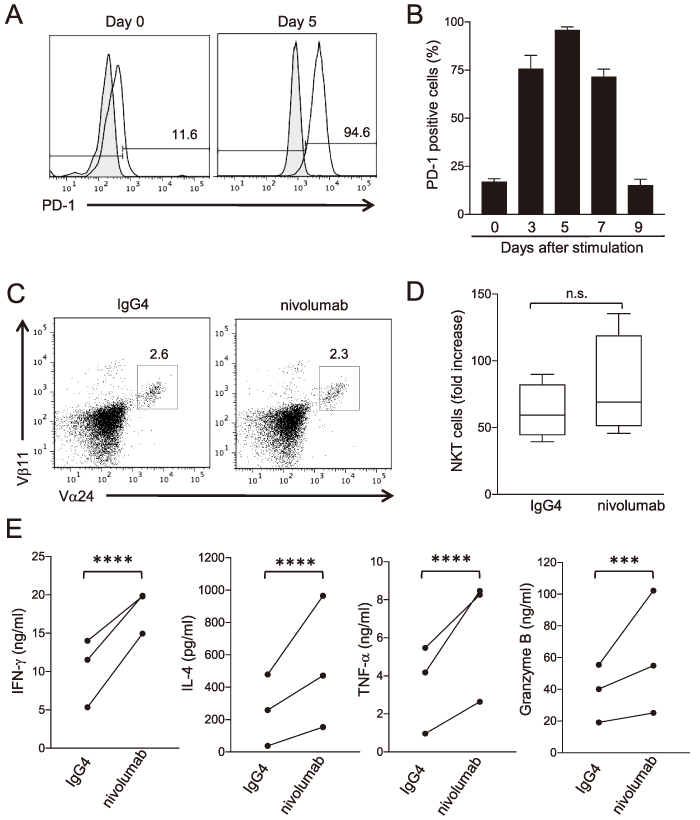
Fig. 1 Nivolumab enhances the production of cytokines and effector molecules by NKT cells. (A, B) PD-1 expression on NKT cells. PBMCs were cultured with α-GalCer and IL-2. Cells were harvested at days 0, 3, 5, 7, and 9, stained with an anti-PD-1 antibody, and analyzed by flow cytometry. (B) Bars and error bars indicate the mean and SD of technical triplicate, respectively (n = 3) . The data are representative of the results from two independent experiments. (C, D) PBMCs were cultured with α-GalCer and IL-2 in the presence of nivolumab or hIgG4 isotype control. Cells were harvested at day 6 and stained with anti-TCR Vα24, anti-TCR Vβ11, and anti-CD3 antibodies. (D) Total numbers of live cells counted after cell harvesting on day 6. The NKT cell number was determined by the following equation: NKT cell number = total number of live cells × % Vα24+Vβ11+ cells / 100. Bars and error bars indicate the mean and SD of biological triplicate, respectively (n = 3) . The data are representative of the results from at least two independent experiments. (E) Purified NKT cells were stimulated with plate-bound α-GalCer-loaded CD1d/anti- CD28 antibody/PD-L1 for 24 h, and the culture supernatants were collected. The production levels of IFN-γ, IL-4, TNF-α, and Granzyme B were determined by cytometric bead array. P-values were calculated by a paired t-test. ***P<0.001, ****P<0.0001, n.s.: not significant.
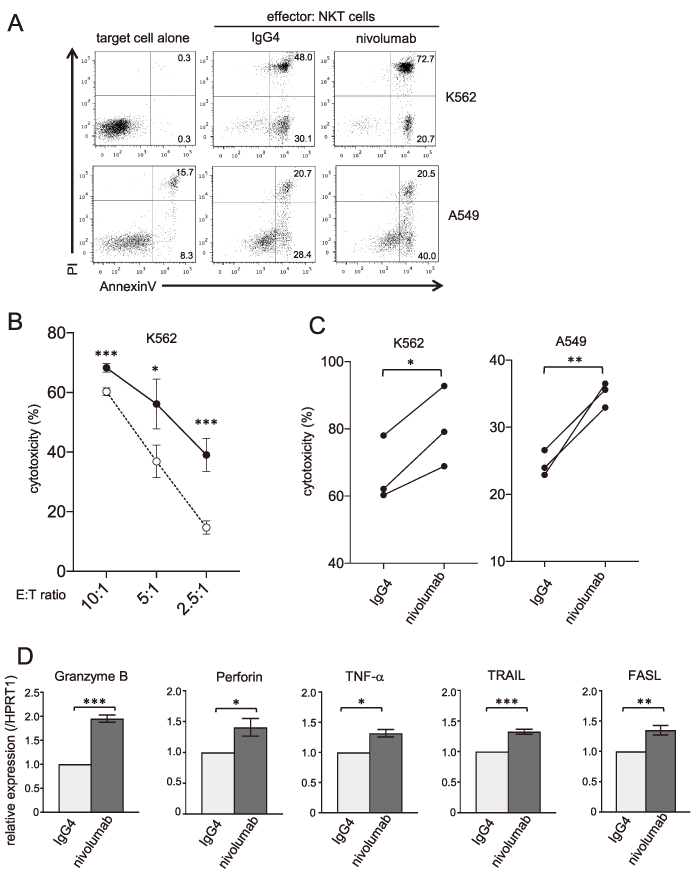
Fig. 2 Nivolumab treatment enhances the tumoricidal activity of NKT cells. (A, B) Purified NKT cells treated with nivolumab or isotype hIgG4 were further treated with nivolumab or hIgG4, and then co-cultured with CTV-labeled K562 or A549 cells for 4 h. The cells were stained with annexinV and PI, and determined for tumor cell-specific apoptosis by gating on CTV labeling. (A) Data for CTV+ K562 or A549 cells co-cultured at an E/T ratio of 10:1. (B) Cytotoxicity against K562 cells calculated for E/T ratios of 10:1, 5:1, and 2.5:1. The black circles indicate the cytotoxic activity of NKT cells treated with Nivolumab, while the white circles indicate the cytotoxic activity of NKT cells treated with an isotype control. The results of three healthy donors against K562 and A549 cells at an E/T ratio of 10:1 are shown in (C) . (D) Purified NKT cells treated with nivolumab or isotype hIgG4 were further treated with nivolumab or hIgG4, and then co-cultured with K562 cells for 4 h. The cells were subjected to real-time PCR to assess the expression levels of Granzyme B, Perforin, TNF-α, TRAIL, and FASL, normalized with HPRT1. Bars and error bars indicate the mean and SD of biological triplicate, respectively (n = 3) . The data are representative of the results from two independent experiments. P-values were calculated by an unpaired t-test. *P<0.05, **P<0.01, ***P<0.001.
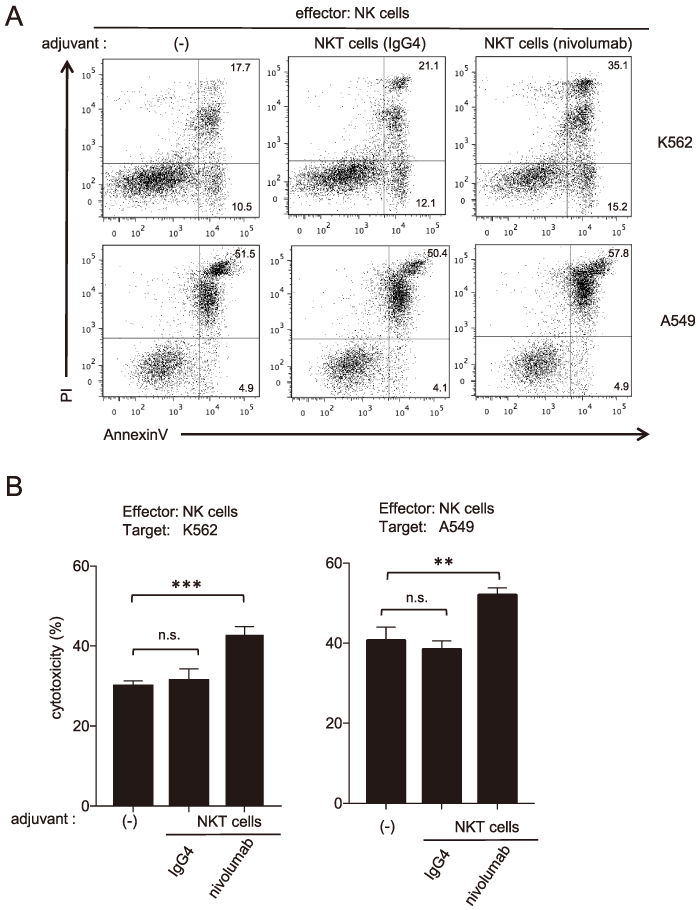
Fig. 3 Nivolumab enhances the adjuvant effect of NKT cells on NK cells. (A, B) Purified NKT cells treated with nivolumab or isotype hIgG4 were co-cultured with K562 cells in the top compartments of transwells, while NK cells were co-cultured with CTV-labeled K562 cells (E/T ratio of 1:1) or A549 cells (E/T ratio of 2:1) in the bottom compartments of the transwells. The cells in the bottom compartments were harvested after 4 h of culture, and stained with annexinV and PI to assess K562 or A549 cell-specific apoptosis. (A) Data for CTV+ K562 cells and CTV+ A549 cells. (B) NK cell cytotoxicity against K562 or A549 cells calculated. Bars and error bars indicate the mean and SD of biological triplicate, respectively (n = 3) . The data are representative of the results from two independent experiments. P-values were calculated by an unpaired t-test. **P<0.01, ***P<0.001, n.s.: not significant.
Herein, we have shown that nivolumab treatment enhanced overall NKT cell activity. Although nivolumab had no effect on the recovery rate of NKT cells after culture, it enhanced cytokine production and had an increased adjuvant effect on NK cells. IL-4 production was also enhanced by the nivolumab treatment. Although the impact of increased IL-4 production on cytotoxicity is still controversial at present, previous reports demonstrated that IL-4 enhanced the cytotoxicity of NKT cells and NK cells[18]. Furthermore, our data indicated that nivolumab treatment elevated the tumoricidal activity of NKT cells. These data suggest that combination therapy of nivolumab treatment and NKT cell-based immunotherapy may be a powerful tool for treatment of cancer patients. We previously reported that blockade of PD-L1 expressed on APCs augmented NKT cell functions[13]. We confirmed that blockade of PD-1 signaling by nivolumab treatment had the same effect. Because nivolumab is a clinically approved drug, its use in NKT cell-based immunotherapy would be an advantage for application in the clinical field. The present data suggest that combination therapy of nivolumab treatment and NKT cell-based immunotherapy may be a powerful tool for treatment of cancer patients.
A limitation of this study is that the peripheral blood NKT cells were collected from healthy volunteers, not from patients with cancer. Since the number of NKT cells are decreased in cancer bearing patients, it is technically difficult to collect enough NKT cells to obtain reliable data. We thus used samples from healthy volunteers; therefore, there is a possibility that the results might not reflect the situation of cancer patient treatment in vivo. Expanded NKT cells were used for all functional assays in this study. Therefore, it might not be simply comparable with the effect of nivolumab on conventional T cells.
In conclusion, NKT cell functions restored by nivolumab may orchestrate and enhance various antitumor immune responses in vivo. The combination of NKT cell-based immunotherapy and nivolumab may overcome immunosuppression mediated by tumor cells, and improve the clinical efficacy of NKT cell-based immunotherapy for patients with advanced cancers.
NM and FI contributed equally to this work. NM and FI designed and performed the experiments. FI wrote the manuscript. SM was in charge of the overall study direction and plnning. All authors have read and approved the manuscript.
This work was supported by Grants-in-Aid for Scientific Research from the Ministry of Education, Culture, Sports, Science and Technology (MEXT) (KAKENHI grant numbers 17K6892 and 18H02892) . The funding bodies played no role in the design of the study and data collection, analysis, interpretation of data and in writing the manuscript.
The authors declare that they have no competing interests.
This study was approved by the Ethics Committee of Chiba University (#3455) . Written informed consent was obtained from all participants included in this study.
The datasets used and/or analyzed during the current study available from the corresponding author on reasonable request.
We thank Saori Tagi for her excellent technical assistance, and Ono Pharmaceutical Co. Ltd. for providing the nivolumab. We also thank Alison Sherwin, PhD, from Liwen Bianji, Edanz Group China (www. liwenbianji.cn/ac) for editing the English text of a draft of this manuscript.
Address correspondence to Dr. Shinichiro Motohashi.
Department of Medical Immunology, Graduate School of
Medicine, Chiba University, 1-8-1 Inohana, Chuo-ku, Chiba
260-8670, Japan.
Phone: +81-43-226-2827.
Fax: +81-43-226-2828.
E-mail: motohashi@faculty.chiba-u.jp
